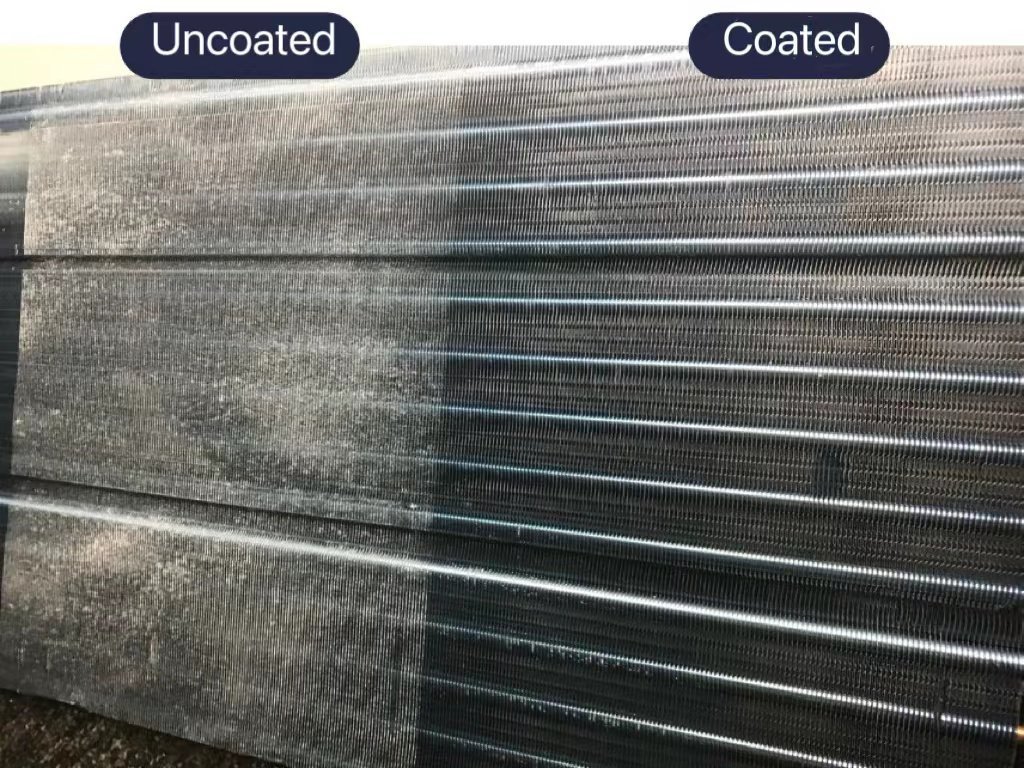
One fin block coated in zones: the coated side stays clean and bacteria-free, the uncoated side collects dust and grows bacteria.
Applied toAC fins (heat exchanger)
MethodCleaning + spray
ComparisonSame fin block, zoned coating
ProductFeibo self-cleaning antibacterial coating
Background
The problem
AC fins are damp all year and a breeding ground for bacteria and mould; contaminants spread into the room with the airflow, causing odours and health risks. Conventional cleaning works only briefly before growth returns.
Scope of work
What we did
Cleaned the fins to remove dust, mould and contaminants
Spray-coated part of the fin block, leaving an uncoated zone for comparison
Compared appearance and antibacterial effect after cure
Results
Results and value
The coated zone carries a dense transparent antibacterial film: bacteria and mould struggle to grow and dust does not cling, while the uncoated zone quickly collects dust and discolours. Ultra-thin and transparent, the coating does not affect heat-transfer efficiency.
Result: uncoated vs coatedFins: damp heat exchange breeds bacteria
AC smells bad and grows bacteria again after every clean?
Tell us the AC type and number of units and we will assess an antibacterial application plan.