

ConcreteBase Coat (FBs101)
Anti-soiling self-cleaning solution for stone surfaces
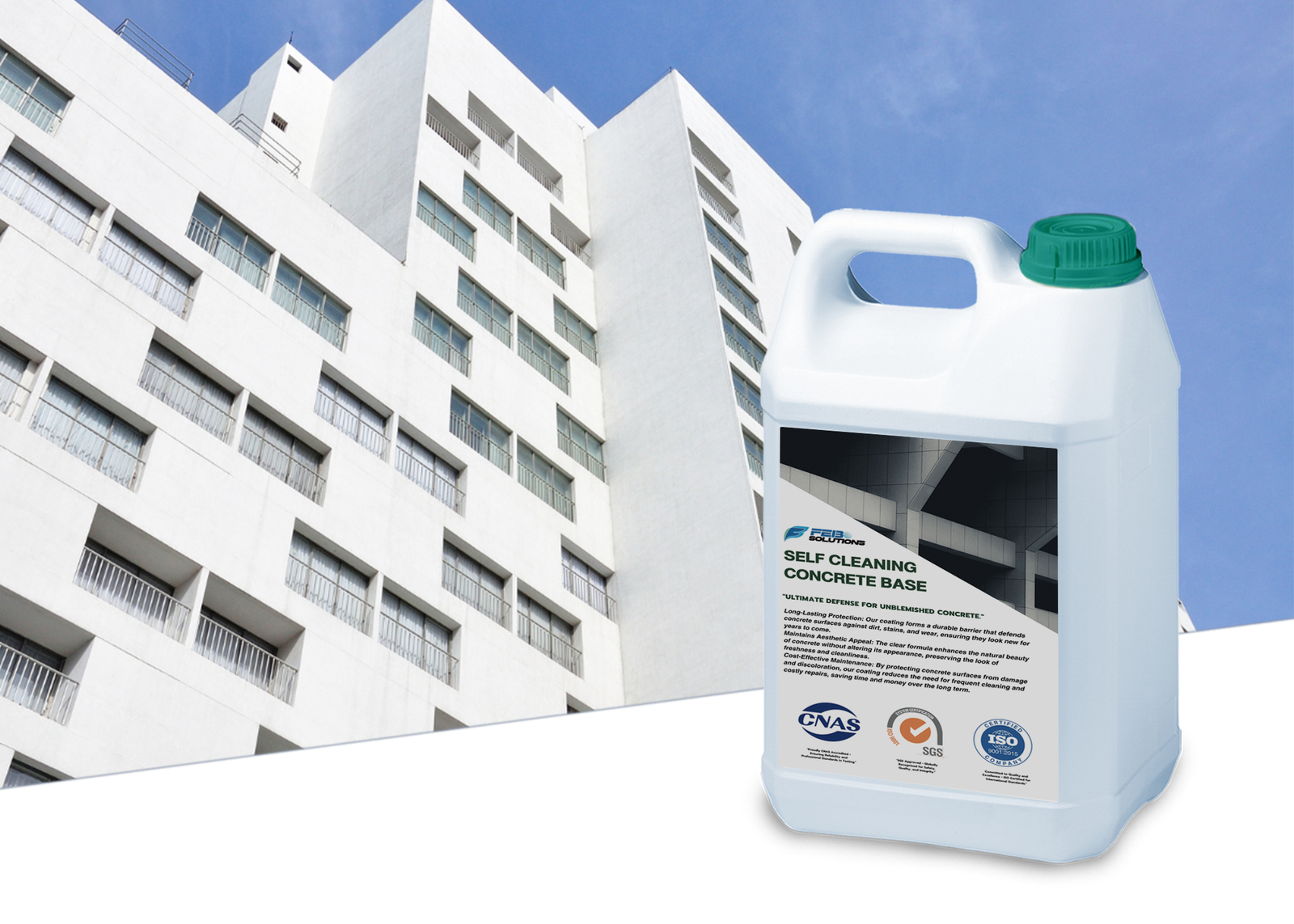
Feibo stone self-cleaning coating uses nano photocatalytic and super-hydrophilic technology so stone surfaces clean themselves with sunlight and rain and stay bright and new for years.
It prevents water marks, mould spots and dust build-up, reduces cleaning and maintenance, extends stone life, protects the building’s image and supports greener, low-carbon cities.
Nano protective primer
Product features:
- Stops pollutants penetrating water-based substrates such as concrete and stone
- Anti-mould and antibacterial: reduces internal contamination and mould
- Penetrating protection — no surface film, the natural texture is preserved
- Colourless and transparent, no change to the material’s appearance
- Combined with the nano self-cleaning coating for even better anti-soiling protection
Functions:
Waterproof, anti-soiling, anti-mould, anti-algae — lasting protection of the substrate’s internal structure
Typical uses:
Porous substrates such as concrete and stone — stops water and pollutants penetrating, extends service life
Main ingredients:
Organosilicon based
Functions and performance
Nano protection / penetrating barrier
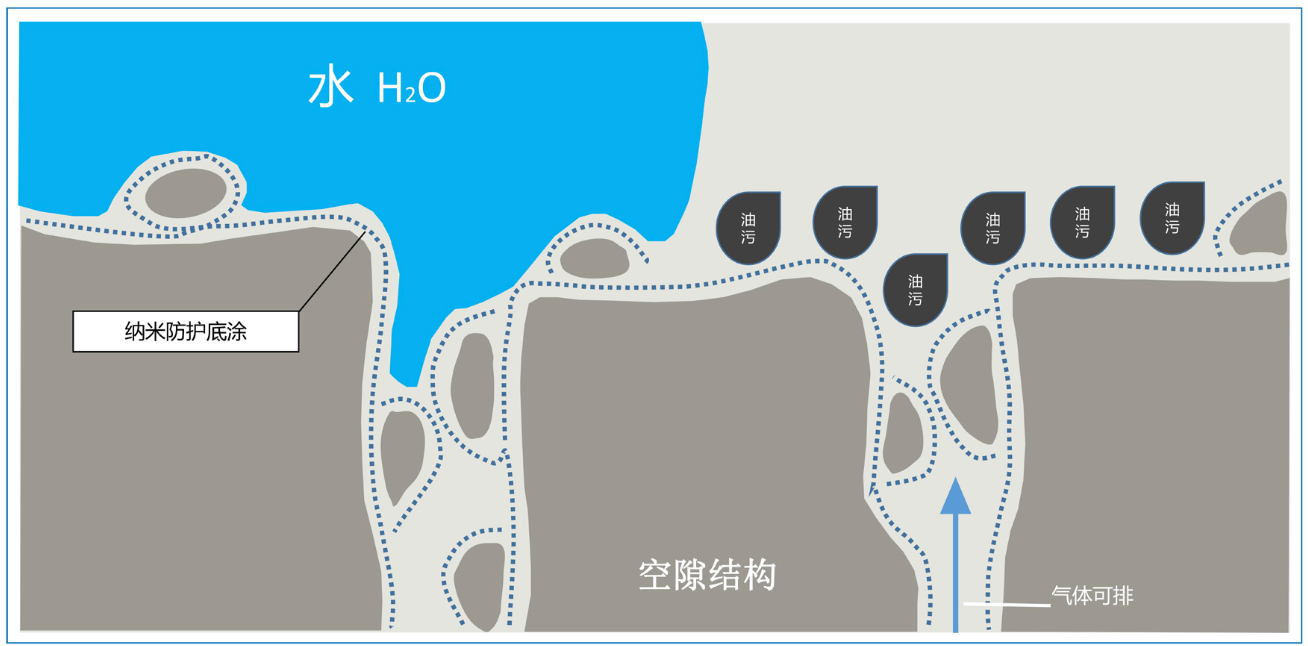
Nano protection: the penetrating nano primer reaches deep into the micro-pores of stone, concrete and other porous substrates, forming a colourless transparent protective layer on and below the surface. It blocks water, oil and pollutants, preventing the efflorescence, mould and corrosion caused by water absorption.
Penetrating barrier: the primer does not change the material’s appearance and keeps its natural texture, while being “breathable but waterproof” — moisture inside the substrate can escape while pollution cannot get in, for lasting protection.
Photocatalytic / super-hydrophilic self-cleaning
Photocatalytic self-cleaning: nano titanium dioxide in the coating develops strong oxidising power under daylight, continuously breaking down organic pollutants left on the stone (oil, mould) into harmless substances — self-cleaning plus antibacterial and anti-mould action.
Super-hydrophilic self-cleaning: the surface water contact angle is below 15°, so rain spreads into a sheet, gets under the dirt and washes it away. Natural rain does the rinsing — no lingering droplets or stubborn water marks, and the stone stays clean and bright long term.
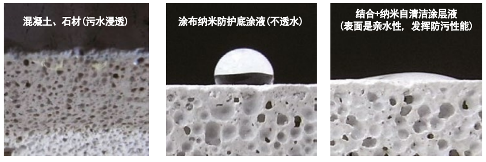
Multi-layer protection · stone self-cleaning results
Left: untreated substrate
Porous materials such as concrete and stone absorb water; pollutants travel inside with it, causing mould, efflorescence and discolouration.
Centre: nano protective primer
After the primer, a penetrating protective layer forms inside the substrate, blocking water and keeping the interior dry and stable.
Right: primer + self-cleaning coating
With the nano self-cleaning top coat, the surface is super-hydrophilic and photocatalytic: rain carries dirt away for lasting anti-soiling, anti-mould and self-cleaning performance.
Industry pain point 1: GRC elements
GRC elements sit outdoors, collect dust and, after absorbing water, suffer efflorescence, mould and surface cracking
Uneven rain run-off leaves mud trails and water marks that spoil the appearance
Frequent cleaning with high labour cost, and pressure washing damages the surface coating
Without effective protection, element life shortens and maintenance cost rises
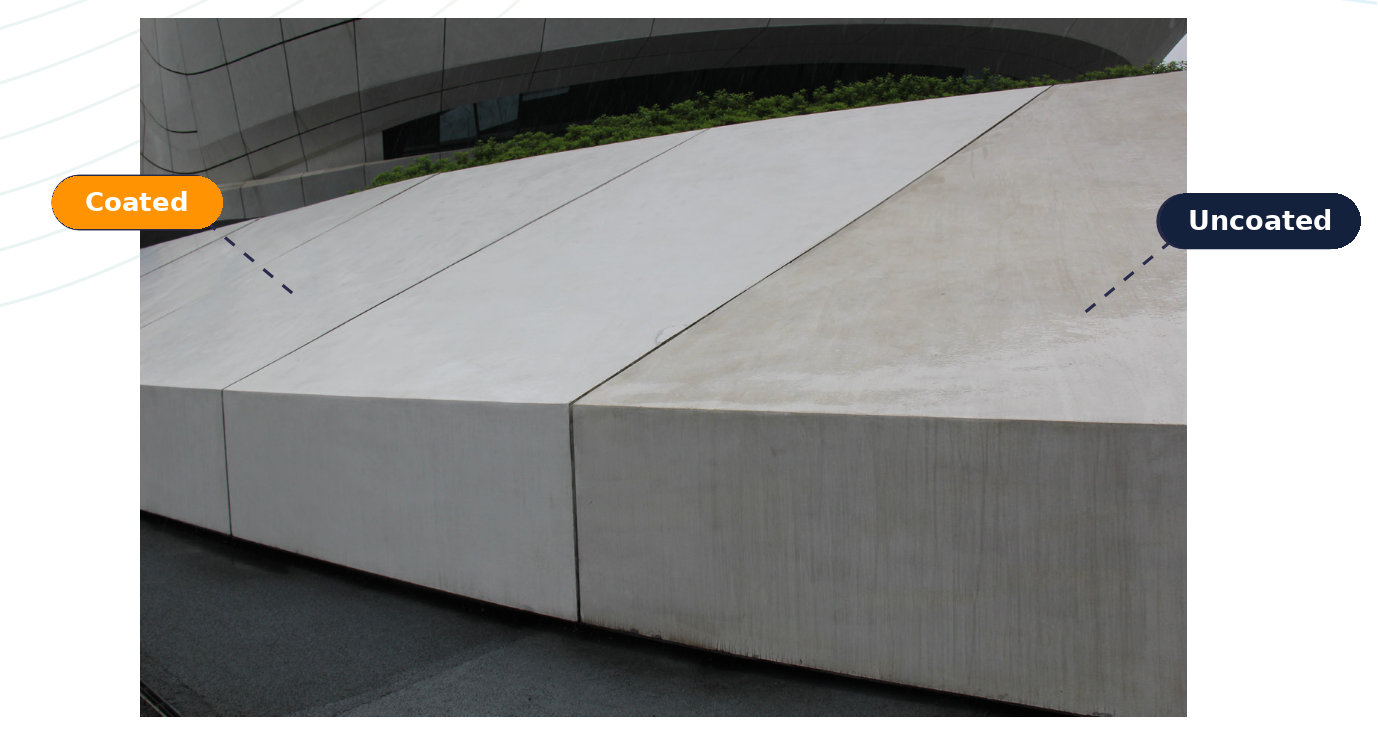
GRC curtain wall or elements before and after treatment (yellowed / clean)
Industry pain point 2: building stone
Granite, marble and other stone are attacked by rain, exhaust and biological growth: surfaces blacken and stain
Stone is porous; once water gets in, mould and algae grow and are hard to eliminate
Cleaning facades or large stone relies on climbing or work at height — a safety risk
Frequent cleaning is costly and can accelerate ageing and dull the colour
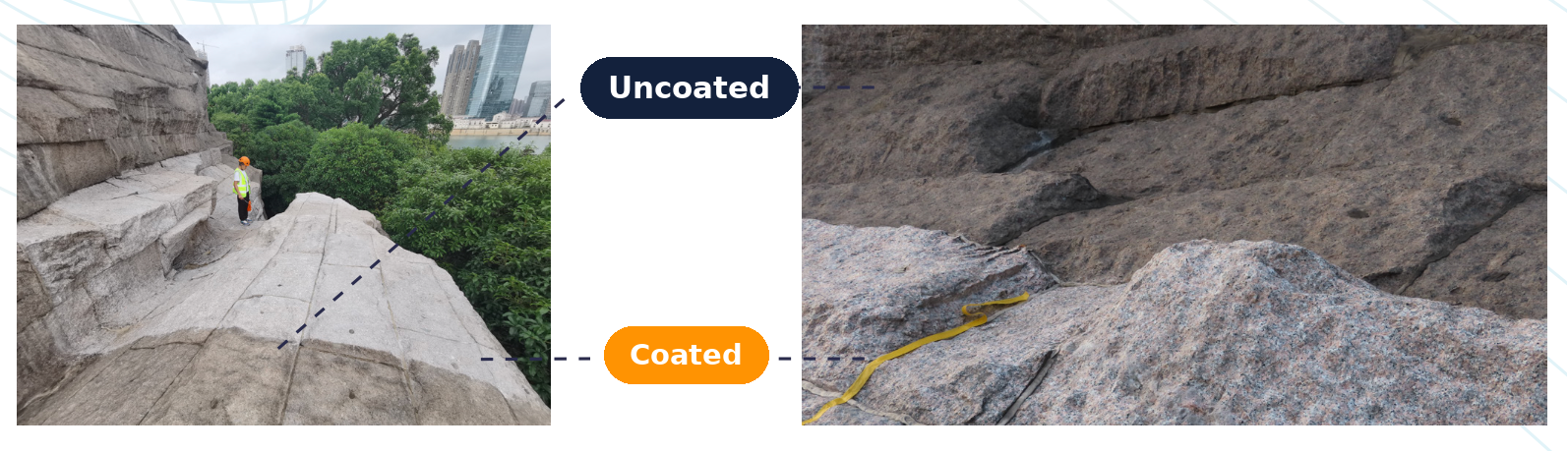
Stone curtain wall comparison (untreated yellowed / treated clean)
How we apply it
We follow a standardised nano protective primer + nano self-cleaning top coat process that gives stone dual protection: “waterproof inside, self-cleaning outside”.
Site survey and feasibility
Our technical team surveys the stone substrate, confirms feasibility, assesses porosity, weathering and environmental conditions and prepares the application plan.
Sample and performance test
Before full-scale application a small sample area verifies the coating’s adhesion, waterproofing and anti-soiling performance on the stone.
Surface cleaning and preparation
Professional stone cleaners and equipment remove dust, stains, algae and old residue, leaving the stone clean, dry and oil-free.
Two-layer application (primer + top coat)
First the nano protective primer is applied evenly, penetrating the pores to form a waterproof barrier;
then the nano self-cleaning top coat gives the surface super-hydrophilic and photocatalytic functions — anti-soiling, anti-mould, no water marks.
Ambient curing
About 4 hours of natural curing forms a dense, transparent two-layer protective film without changing the stone’s texture or colour.
Testing and data collection
After application, waterproofing, anti-soiling and self-cleaning performance are tested to confirm the two-layer system, and an evaluation report is provided.
Stone yellowing, staining and costly upkeep?
Feibo nano coating: one application, 3–5 years of lasting protection — stone that stays clean with less maintenance.
Proven on curtain walls, plazas and public buildings — get in touch.