
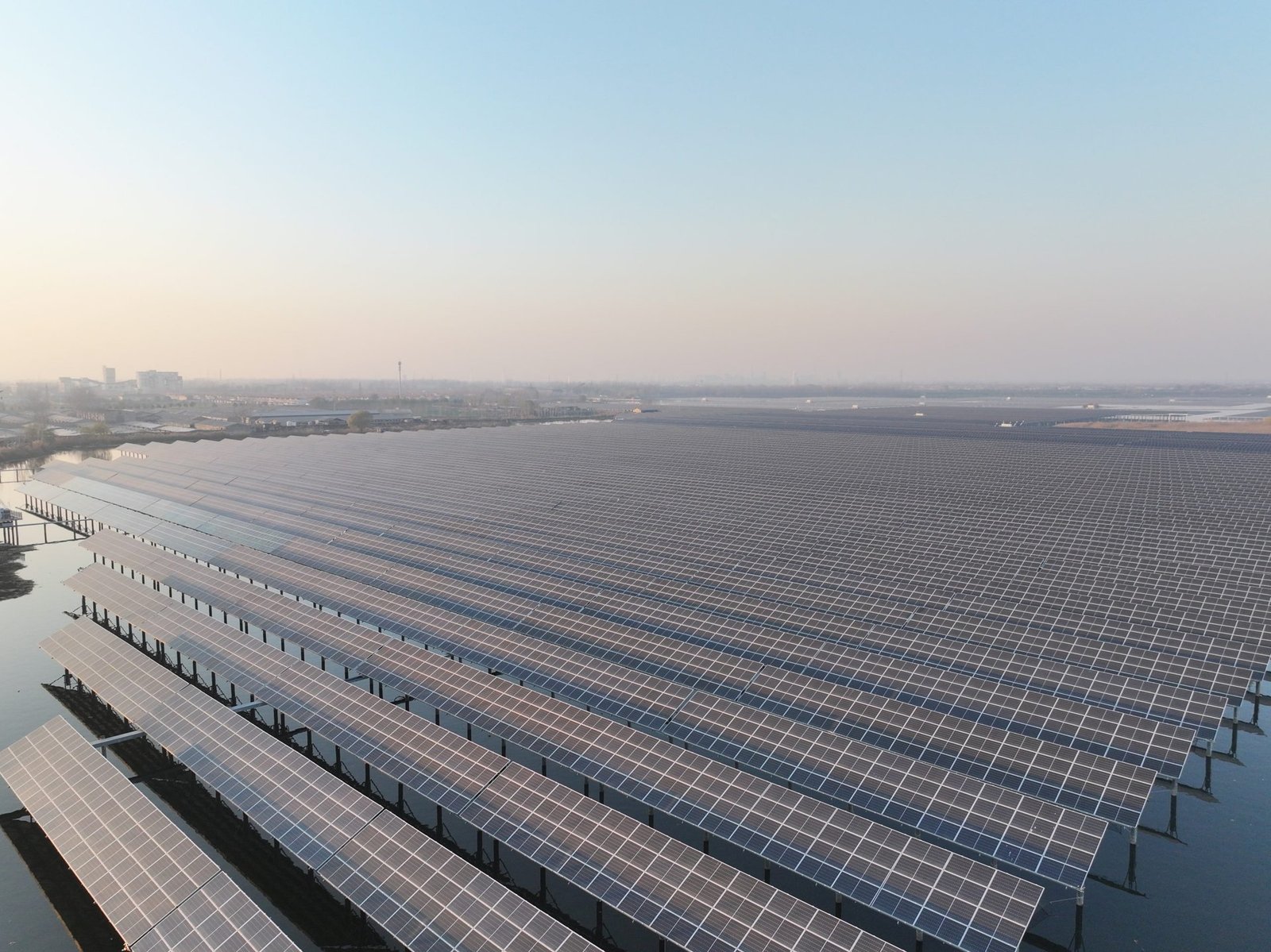
SolarPanel Coat (FBqg205)
Anti-soiling self-cleaning solution for PV modules
Feibo’s PV self-cleaning coating uses nano photocatalytic and super-hydrophilic technology so module surfaces clean themselves with sunlight and rain. Less manual maintenance, longer module life and a clear gain in overall generation efficiency — for a more efficient, low-carbon energy system.
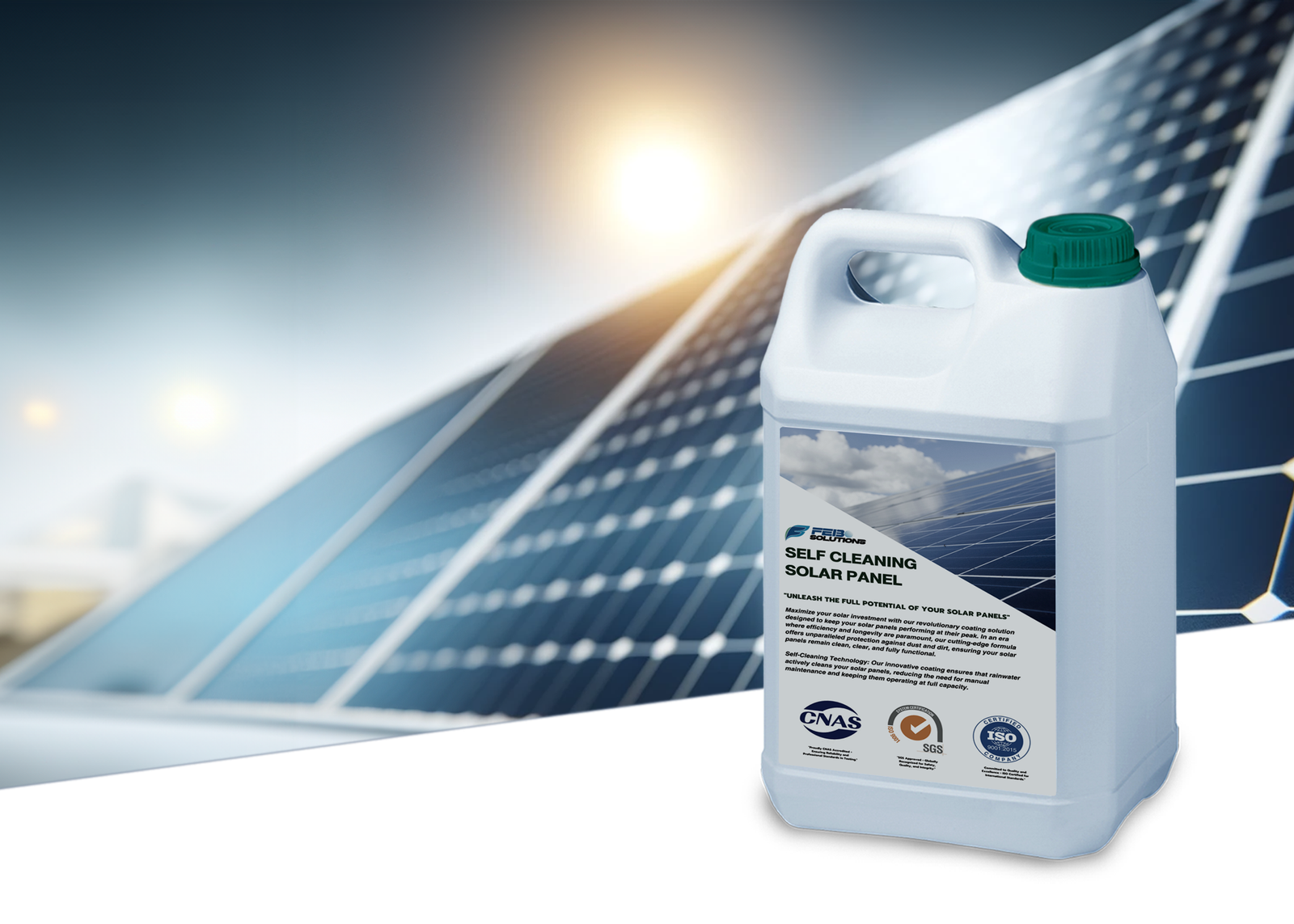
PV power-boost coating liquid
Product features:
50 nm textured surface that reduces visible-light reflection
Ultra-thin transparent coating that raises visible-light transmission and therefore power output
Hydrophilic: water contact angle below 20°, helping rain wash dirt away
Resists adhesion of oil and organic pollutants
- Nano static-dissipative function: surface resistance below 10⁹Ω, so dust and sand do not cling
Functions:
Super-hydrophilic, anti-static, higher light transmission
Typical uses:
PV glass surfaces — higher generation efficiency
Main ingredients:
Silicon dioxide, titanium oxide, silicon-oxygen compounds
Functions and performance
Super-hydrophilic / anti-oil function
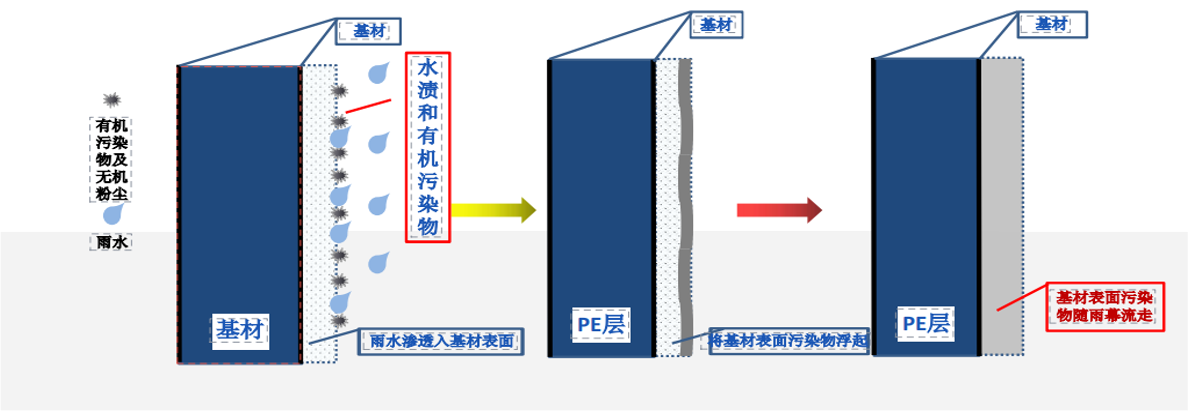
Super-hydrophilic: the inorganic anti-soiling film makes the substrate hydrophilic, keeping the water contact angle below 15°; rain and running water get under the dirt, lift it and wash it away, preventing stubborn oil and organic stains.
Anti-oil: based on polar/non-polar immiscibility, the low surface energy of the nano material stops airborne organic pollutants from sticking.
Anti-static function
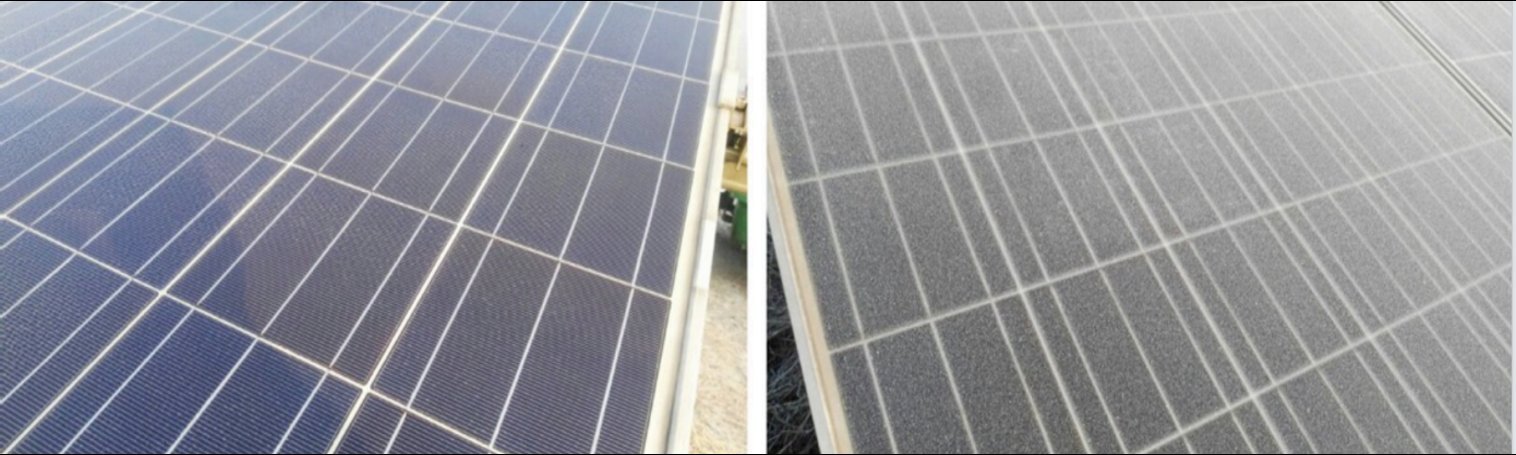
Conductive nano semiconductor materials bring the film resistance below 10⁹Ω. Dust and sand do not cling, and what does land falls off easily.
Anti-reflective function
The fine texture of the coating surface reduces visible-light reflection, and the 100 nm ultra-thin transparent film increases visible-light transmission.
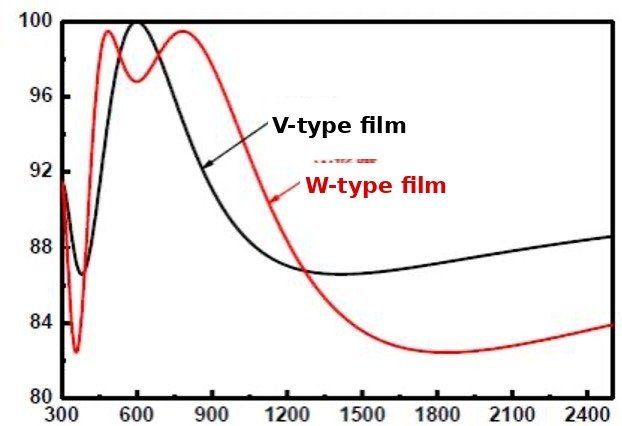
Light transmission — initial value
| Wavelength (nm) | Uncoated (%) | Coated (%) | Change |
|---|---|---|---|
| 1500 | 88.9 | 89.8 | 101% |
| 1000 | 86.6 | 88.5 | 102% |
| 900 | 86.9 | 89.1 | 102% |
| 800 | 87.7 | 90.3 | 103% |
| 700 | 89.4 | 92.5 | 103% |
| 600 | 90.5 | 94.2 | 104% |
| 500 | 90.7 | 94.7 | 104% |
| 400 | 90.0 | 93.0 | 103% |
| 340 | 88.2 | 90.7 | 102% |
Result: coated glass shows an average light-transmission gain of 2.5% over uncoated glass (340–1500 nm). Cause: the surface structure of the coating raises transmission after application.
Light transmission — after 4 months outdoor exposure
| Wavelength (nm) | Uncoated (%) | Coated (%) | Change |
|---|---|---|---|
| 1500 | 87.8 | 89.4 | 102% |
| 1000 | 85.3 | 88.3 | 104% |
| 900 | 85.2 | 88.9 | 104% |
| 800 | 85.8 | 90.0 | 104% |
| 700 | 86.7 | 91.3 | 106% |
| 600 | 87.1 | 92.9 | 107% |
| 500 | 86.0 | 92.4 | 107% |
| 400 | 82.8 | 88.8 | 107% |
| 340 | 65.0 | 69.3 | 107% |
Result: coated glass shows an average light-transmission gain of 4.4% over uncoated glass (340–1500 nm). Cause: the self-cleaning function keeps the coated glass at good transmission.
Ageing resistance
Outstanding ageing resistance: a 100% inorganic coating that is highly weather-resistant and does not degrade over the years. After 600 hours of accelerated ageing there was no chalking. In real outdoor use, with natural sand and wind wear, the coating’s high-efficiency period is five years, after which the effect fades slowly year by year.
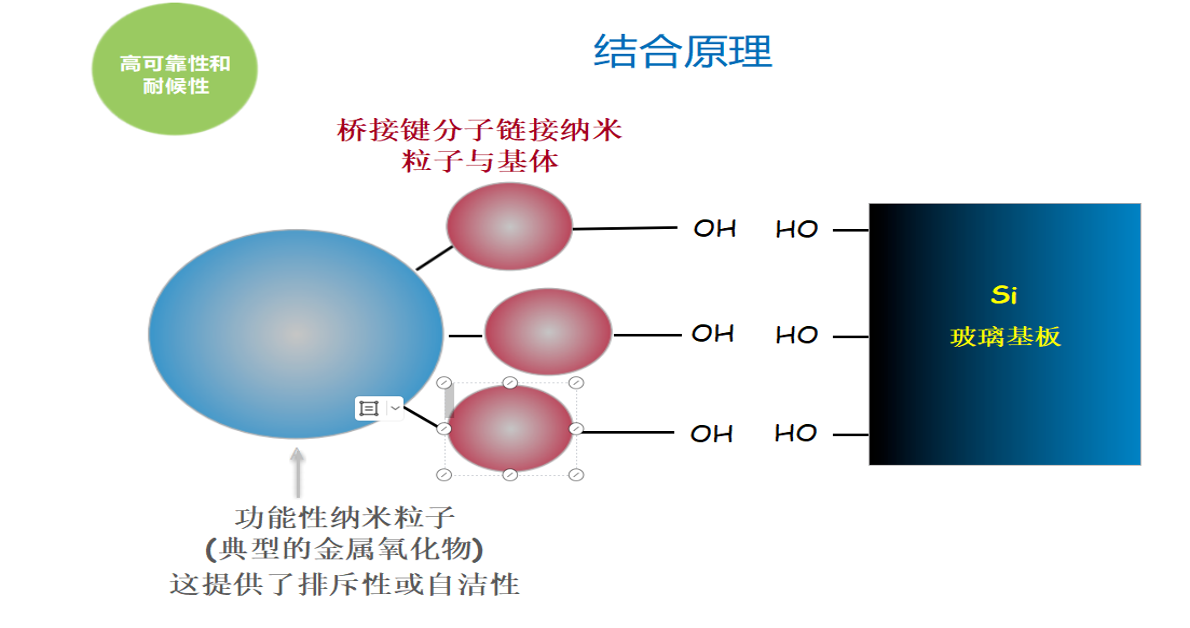
Non-polymerised monomers withstand much longer service.
Si–O bonds have a bond energy of 452 kJ/mol, second only to the F–H bond of fluorocarbon coatings (565 kJ/mol) — and fluorocarbon coatings already carry warranties of 20+ years.
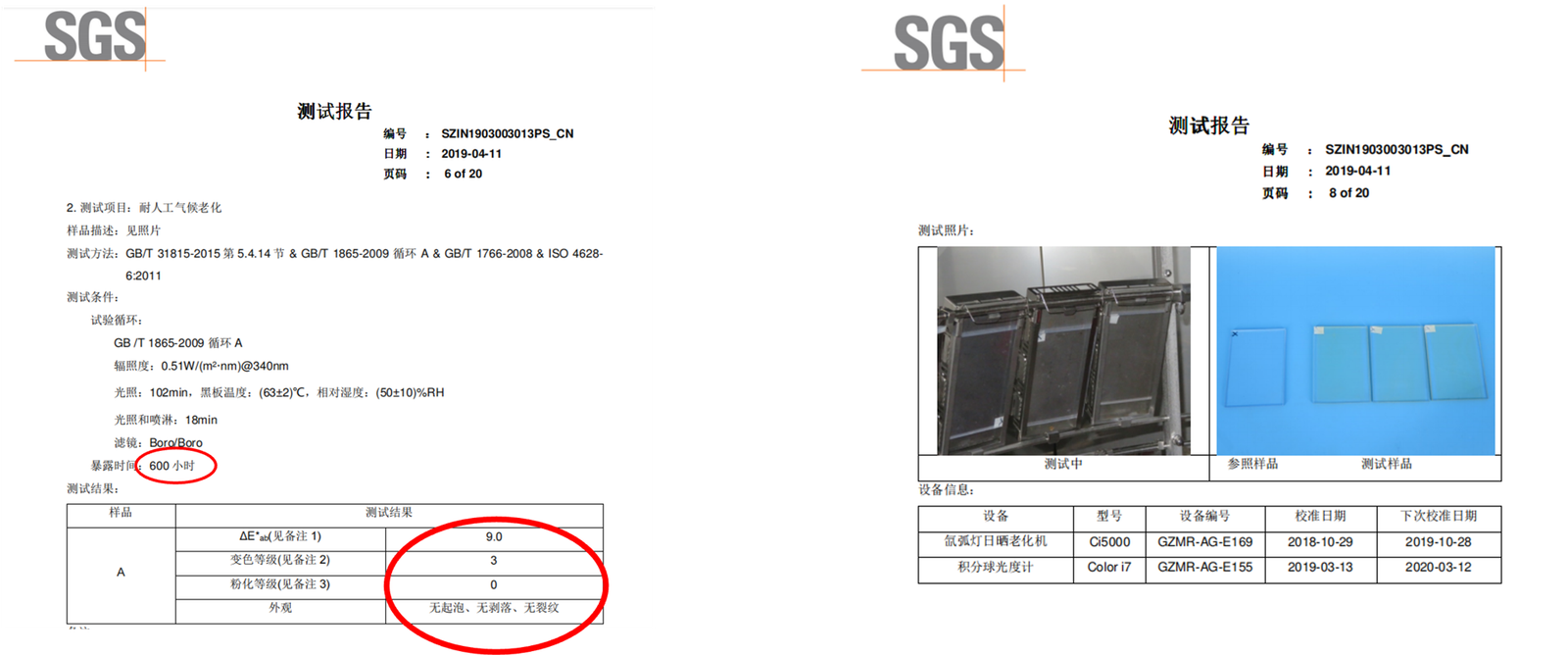
Anti-reflective self-cleaning coating: on-site results
After coating, the anti-static effect keeps dirt from sticking; rain or a plain-water rinse is enough to restore a clean surface, making cleaning far easier, reducing manual cleaning and saving labour cost.
The combined anti-reflective and self-cleaning effect raises generation by about 3% or more, improving returns for the plant owner.

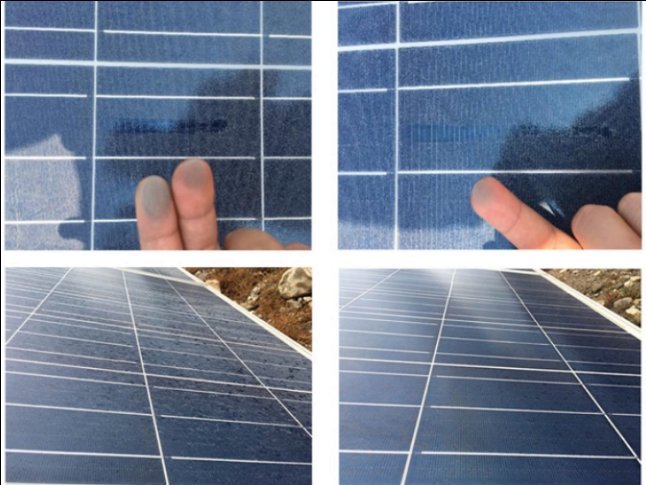
Industry pain point 1
- Crystalline modules are covered and eroded by sand, dust and bird droppings, and frequent cleaning damages the panels.
- Soiling creates hot spots that can short-circuit modules, cutting output and creating safety risks.
- Heavy spending on labour, cleaning and cleaning robots is needed just to hold the plant’s guaranteed output.
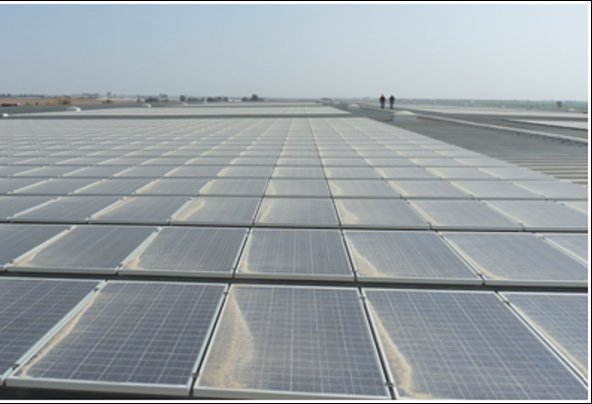
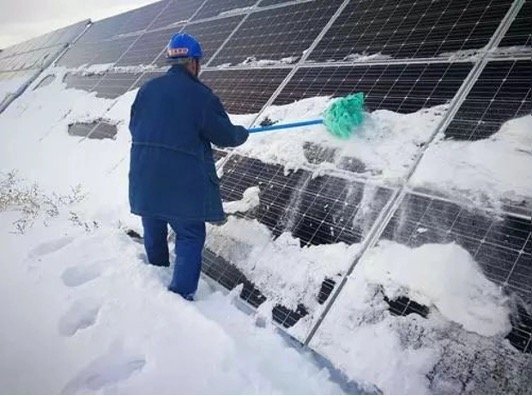
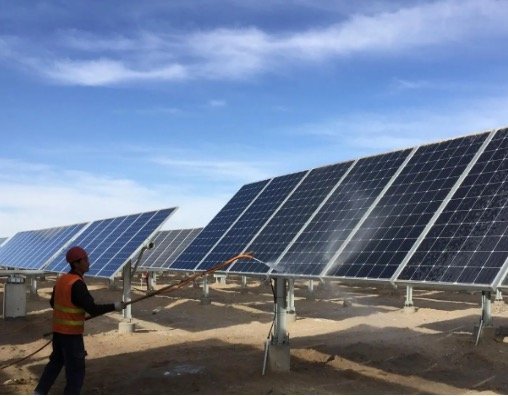
Left: lower light transmission → lower output | Centre: hot spots turn a generating cell into a consuming one | Right: slow chemical corrosion roughens the glass and scatters light
Cutting cleaning cost while raising efficiency and keeping it from declining is the key to a profitable plant.
Industry pain point 2
Sandstorms, dust fall, rain, snow and bird droppings are the main causes of lost PV output — sandstorms and dust fall most of all. They are a long-term challenge to plant returns and O&M.
| Environment | Characteristics | Example region | Output loss from soiling |
|---|---|---|---|
| Hot and humid | High temperature and humidity all year, little or no wind | Hainan | 18% |
| Hot, dry and dusty | High temperature all year, dry with little rain, few clouds, frequent sandstorms | Xinjiang | 15% |
| Temperate urban | Dry, windy spring; hot, rainy summer; cold, dry winter | Beijing | 10% |
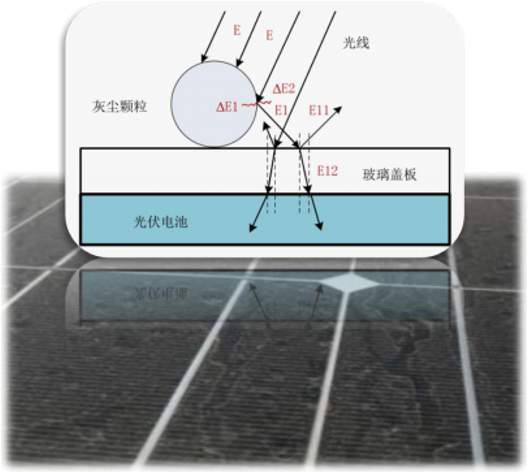
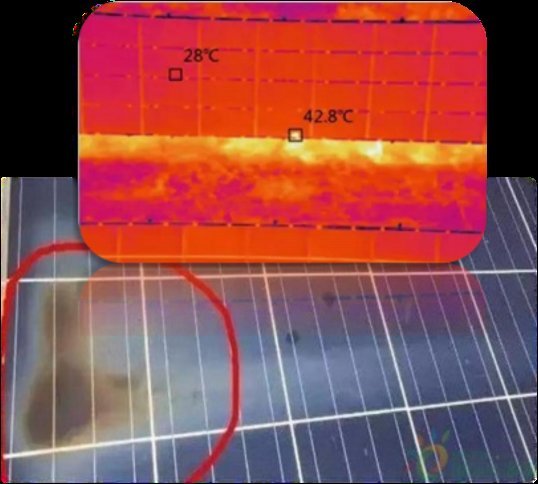
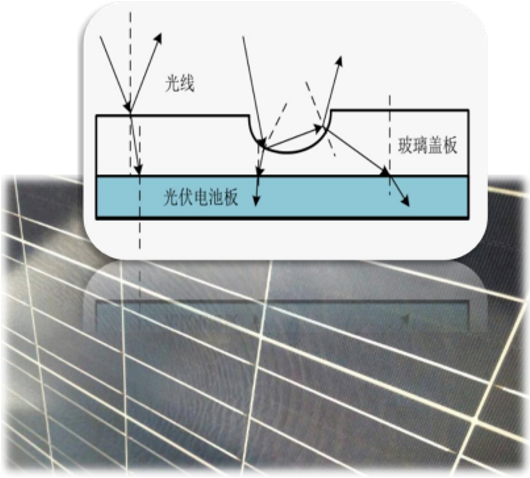
Left: lower light transmission → lower output | Centre: hot spots turn a generating cell into a consuming one | Right: slow chemical corrosion roughens the glass and scatters light
The solution
Post-treatment brush-coating process
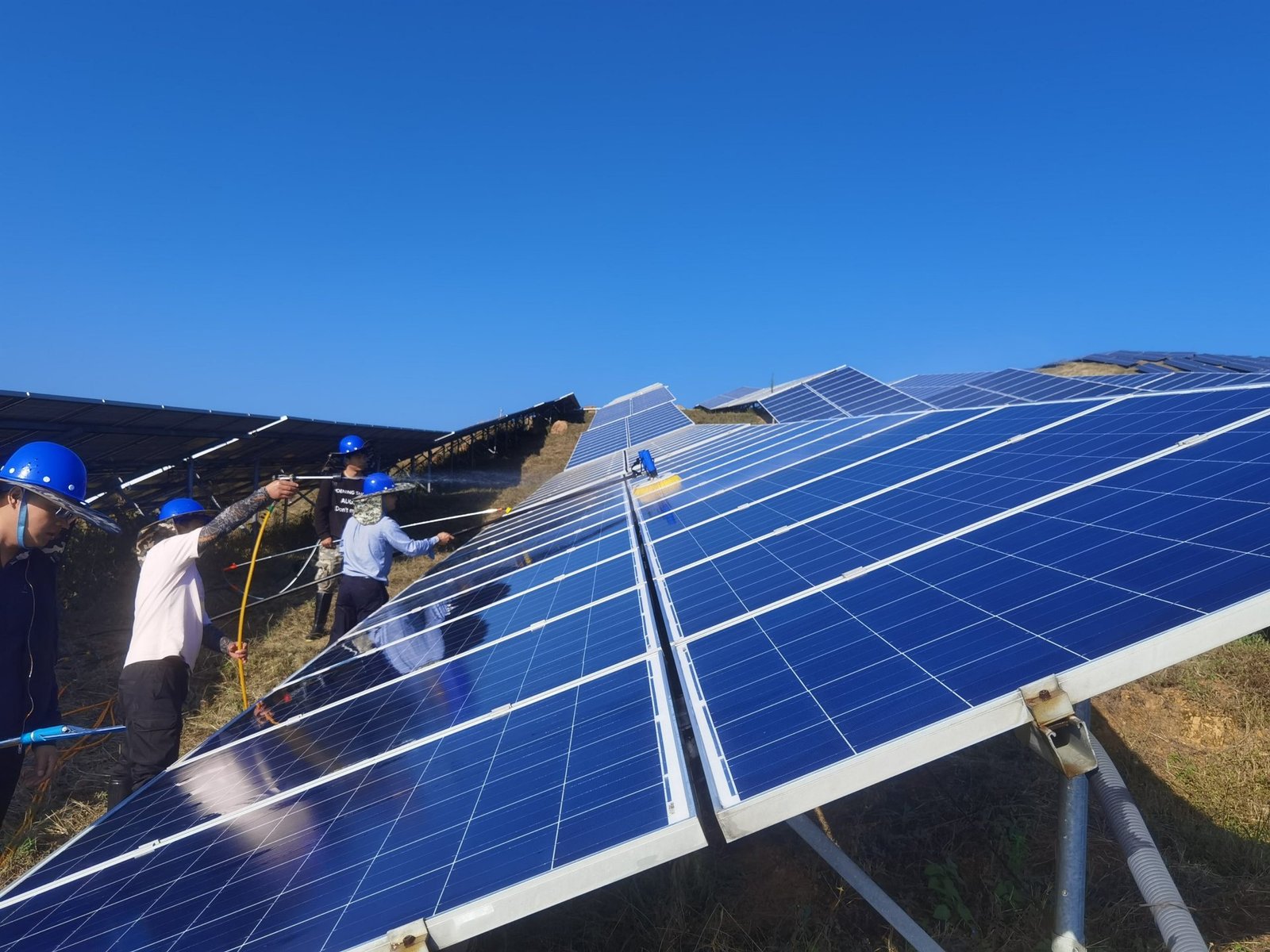
How we apply it
We follow a standardised nano-coating application process so every project delivers the expected performance efficiently and reliably. A typical process:
Site survey and feasibility
Our technical team surveys the site, confirms feasibility, assesses environmental factors and defines the comparison test array.
Preliminary power and current test
Before full-scale application a small test verifies the improvement in conversion efficiency and current output after coating.
Specialist cleaning
Module surfaces are cleaned with soft neutral water plus specialist detergent and tools — no dust, no dirt, no oil film.
Semi-automatic spray application
Once the surface is fully dry, the nano coating is applied by semi-automatic brush or spray for even, consistent coverage.
Ambient curing
After spraying, the coating cures naturally for about 4 hours into a dense, stable photocatalytic protective film.
Data collection and reporting
On completion, performance is monitored and data collected to confirm the generation gain, and a full project report is delivered.
Cleaning too often and still losing output?
Feibo nano photocatalytic coating: ten years maintenance-free, higher generation efficiency, lower O&M cost.
Our solution is proven in many extreme environments — get in touch.